Why the Old Ways Suddenly Make More Sense
Every few years, someone declares that traditional Thai gardens are out of fashion. I’ve been hearing that since the late ’90s, and every single time, the trend circles right back. The funny thing is, what people call “traditional” today isn’t really the same garden our parents built thirty years ago. It has quietly evolved.
These days, when I sit down with homeowners to sketch ideas, the conversation almost always drifts toward the same topics. Water bills. Rising temperatures. Solar panels. Native plants. Maintenance. Nobody asks for the biggest waterfall anymore. They ask how to make the garden feel cooler without running the air conditioner all afternoon.
Personally, I think that’s a healthy change.
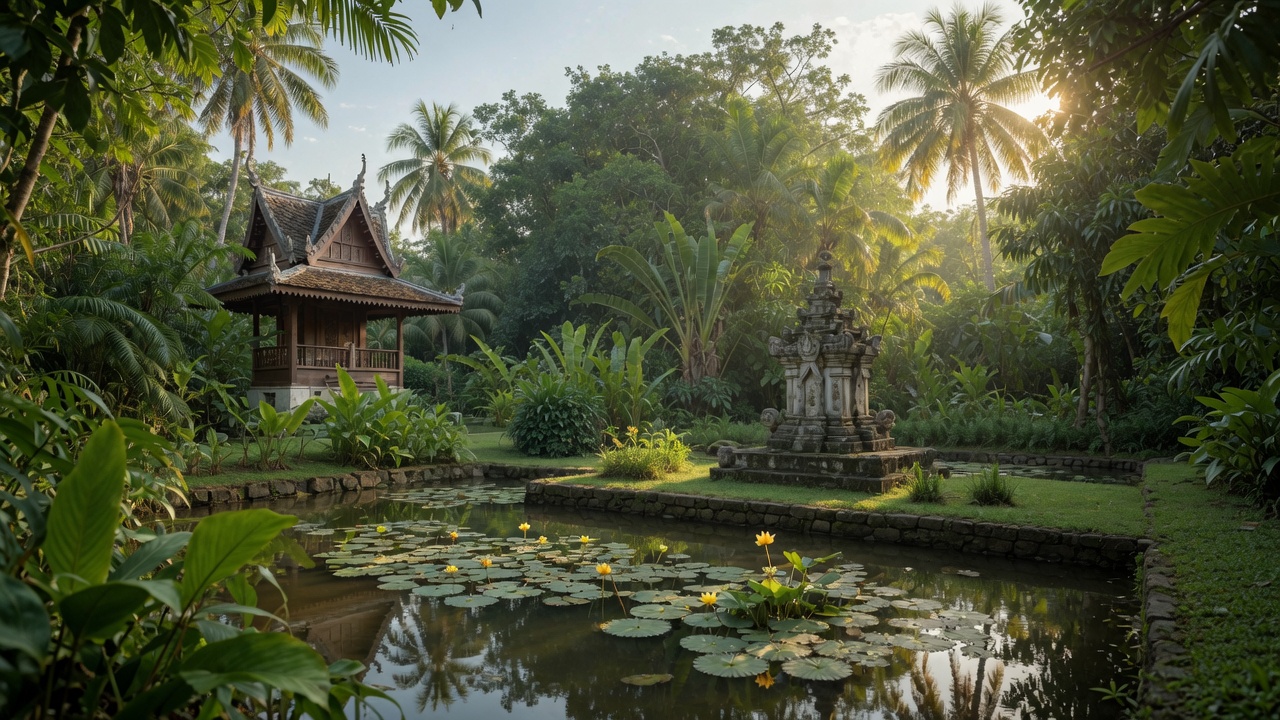
The biggest misconception I still run into is the idea that a Thai garden needs to be packed with decorative features. I can’t count how many projects I’ve been called in to “fix” after someone spent a fortune importing oversized stone lanterns, concrete statues, or elaborate fountains because they thought that was what made a garden look authentic.
It rarely does.
In fact, I’d argue those pieces often become distractions.
One property I worked on outside Ayutthaya had no fewer than fourteen decorative ornaments squeezed into a space that wasn’t much bigger than a tennis court. There were dragons, elephants, pagodas—even a miniature windmill for reasons nobody could explain. We removed nearly everything except two old mango trees and a simple sandstone path. Six months later the owners admitted they enjoyed sitting outside far more than before.
Sometimes taking things away is the best design decision you’ll ever make.
A real Thai garden has never been about showing off. It’s about creating comfort. Deep shade during a hot afternoon. A breeze moving through layered planting. The smell of jasmine after sunset. Those are the things people remember long after they’ve forgotten what kind of paving stones you used.
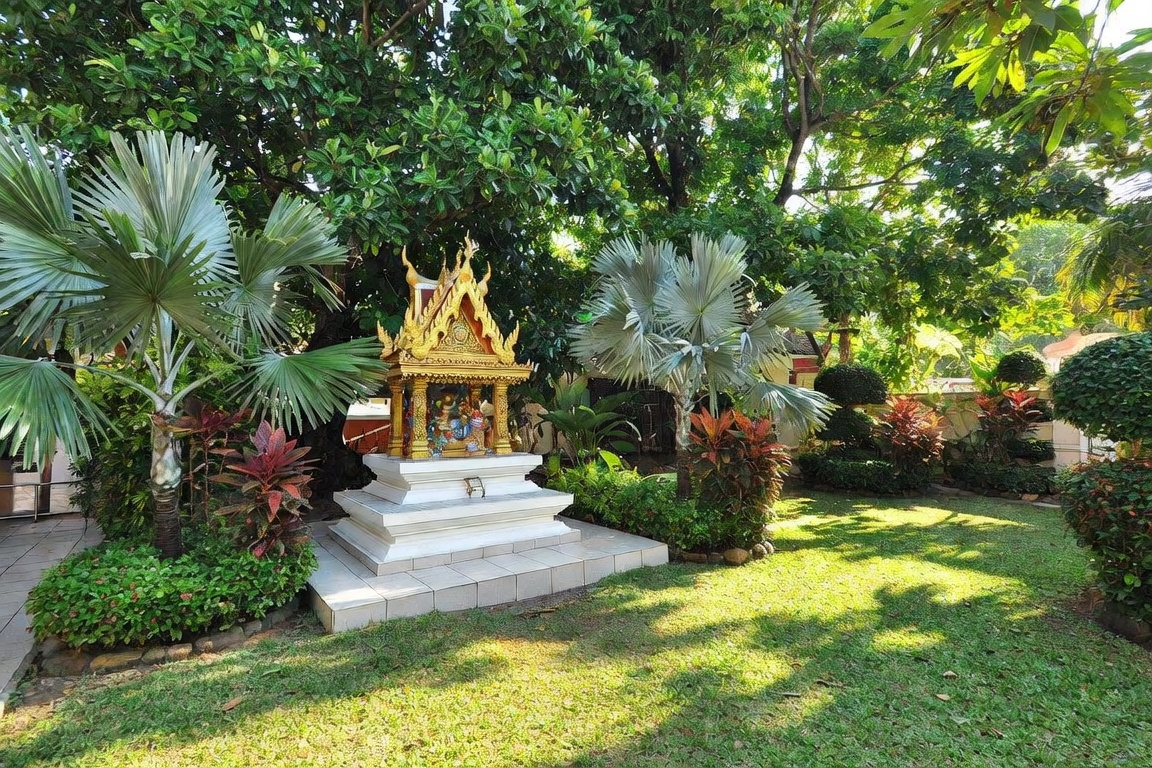
Sustainability has become one of those words that gets thrown around so often it almost loses its meaning. To me, it’s actually much simpler than people make it sound.
Good garden design shouldn’t fight nature.
If your irrigation system has to work overtime every single day just to keep imported plants alive, something has already gone wrong. I’ve had clients insist on planting Japanese maples because they fell in love with photographs online. Beautiful trees? Absolutely. Built for central Thailand? Not even close. Most struggled through the first dry season before quietly giving up.
Native species don’t ask for that kind of attention.
Trees like Pikul, Kaew, and local evergreen varieties have spent centuries adapting to this climate. They know how to survive our heat, our sudden downpours, and those long stretches when rain simply refuses to arrive. Once established, they usually need far less water than imported ornamentals, and they reward you with something that’s becoming surprisingly rare these days—a garden that looks better every year instead of more expensive to maintain.
The same thinking applies beneath your feet. I’ve gradually stopped specifying large concrete patios whenever I can avoid them. Gravel, permeable pavers, decomposed granite, even simple stepping stones surrounded by grass allow rainwater to soak back into the ground instead of racing toward the nearest drain. After one heavy tropical storm, the difference is obvious.
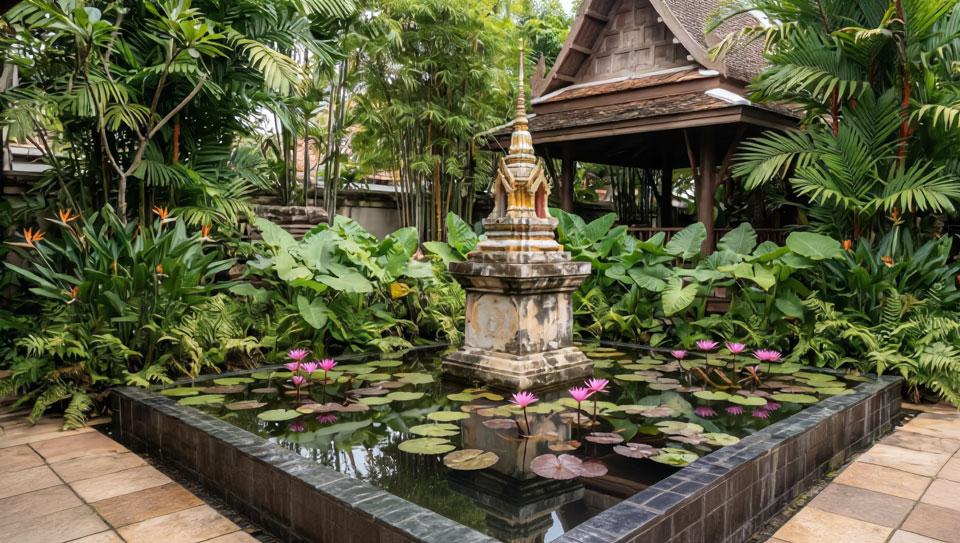
Renewable energy has also found its place in the garden, although probably not in the way most people imagine.
It’s rarely the headline feature.
The best installations are almost invisible.
A decade ago, I dreaded running electrical cables across established gardens. Trenches everywhere, roots getting disturbed, muddy lawns that never looked quite the same afterwards. Today, high-quality solar landscape lighting has solved most of those headaches. Modern fixtures are brighter than people expect, the batteries last longer, and you don’t have electricians digging through flower beds every time you want another pathway light.
I’ve even started using compact solar-powered pumps on smaller water features where running mains electricity simply doesn’t make sense anymore. They’re quieter, easier to install, and surprisingly reliable, provided the panel gets decent sunlight for most of the day.
Technology, in my opinion, works best when nobody notices it’s there.
The garden should still feel like a garden.
Not an outdoor showroom full of gadgets.
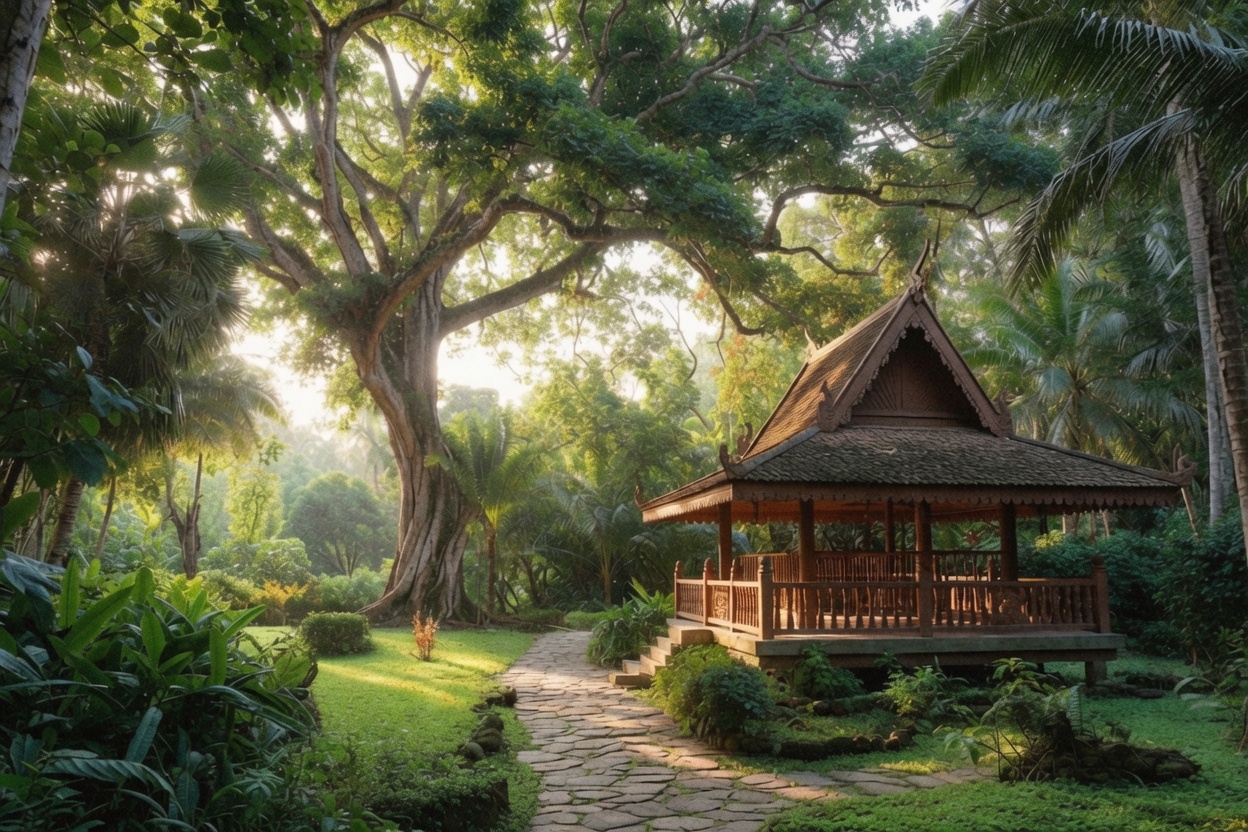
Looking ahead, I don’t think Thai gardens in 2026 are becoming more modern.
Oddly enough, I think they’re becoming more honest.
We’re planting trees because they cool the house, not because they fill an empty corner. We’re choosing native plants because they belong here, not because they’re fashionable. We’re using solar power because it quietly makes sense, not because it’s something to brag about.
After more than three decades working in gardens, that’s probably the biggest lesson I’ve learned.
The best landscapes don’t demand your attention every time you step outside.
They simply make you want to stay a little longer.